VA Ratings for Tinnitus in 2026: Fact vs. Fiction

The truth about the “10% rule,” the proposed changes, and how to maximize your claim this year.
Clearing Up the 2026 Rumors
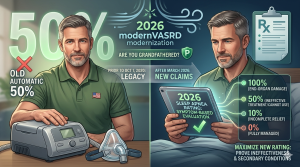
If you’ve been on veteran forums lately, you’ve likely seen posts claiming the VA is “eliminating” the 10% rating for tinnitus. As of March 2026, here is the ground truth: The standalone 10% rating for tinnitus (Diagnostic Code 6260) is still in effect. While the VA has proposed folding tinnitus into hearing loss ratings, that rule has not been finalized. If you have ringing in your ears, now is the most critical time in a decade to get your claim filed and “grandfathered” under the current system.
1. The “Golden Key” Strategy
Many veterans overlook tinnitus because “it’s only 10%.” However, experienced advocates call it the “Golden Key.” Why? Because it is one of the easiest conditions to service-connect (especially for those with high-noise MOS backgrounds), and it opens the door to Secondary Conditions that carry much higher ratings.
In 2026, the VA is seeing a massive surge in successful secondary claims linked to tinnitus, including:
- Anxiety and Depression (up to 100%): The “never-ending” nature of the ringing often leads to severe mental health strain.
- Somatic Symptom Disorder: A condition where physical symptoms (like ringing) cause extreme distress and functional impairment.
- Secondary Insomnia: If the ringing keeps you from sleeping 3+ nights a week, this can be rated separately as a mental health condition.
2. Hearing Loss: The “Objective” Test
Unlike tinnitus, which is subjective (only you hear it), hearing loss is rated based on strict, objective numbers from an Audiometric Test. To get a 10% or higher rating in 2026, the VA looks at two things:
- Pure Tone Thresholds: Your ability to hear specific frequencies (1000, 2000, 3000, and 4000 Hz).
- Speech Discrimination: Your ability to understand 50 “Maryland CNC” words in a controlled environment.
Pro-Tip: Many veterans “fail” the beep test but “pass” the word test because they are good at guessing. In 2026, if you can hear the sound but can’t understand the words, your speech discrimination score is what will likely drive your rating higher.
3. Protection for Existing Ratings
A common fear in 2026 is that filing a new claim will cause the VA to “re-evaluate” and lower your existing tinnitus rating.
- The Reality: Under VA law, a change in the rating schedule itself is not grounds for reducing a protected evaluation.
- If you are already rated at 10% for tinnitus, you are safe. Even if the VA eventually changes the rules for new applicants, your current rating is protected unless your condition significantly improves (which is rare for tinnitus).
4. March 2026 Action Plan
If you are struggling with ear health, do not wait for the “proposed” rules to become “final” rules.
- Submit an Intent to File today. This locks in your effective date.
- Get a private Audiology exam. Don’t rely solely on the C&P examiner; have your own results ready.
- Ask for a “Nexus Letter.” Ensure your doctor explicitly states your tinnitus is “at least as likely as not” related to your military noise exposure.