
The PACT Act in 2026: New Presumptive Conditions and Why You Should Re-File
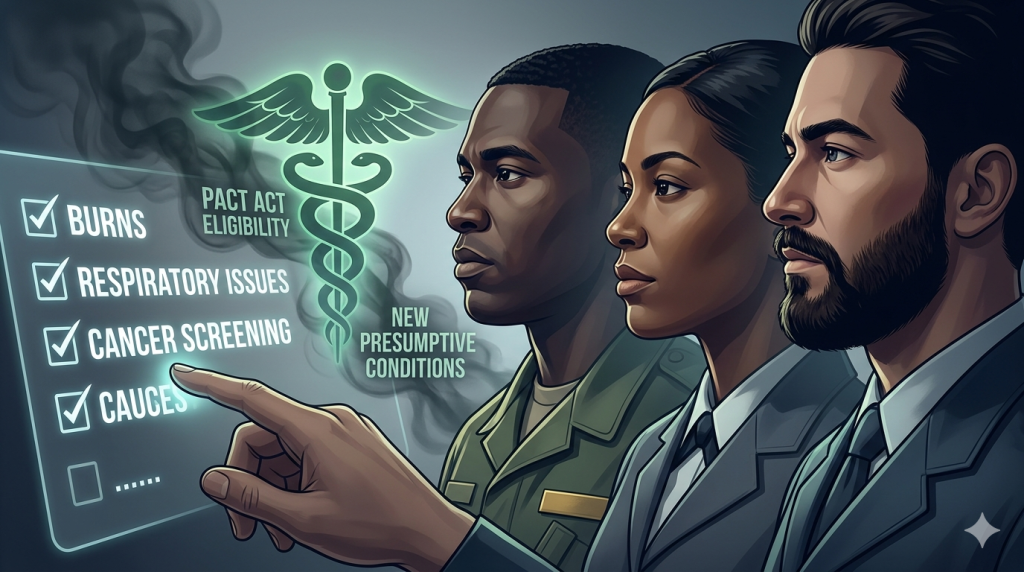
How the largest expansion in VA history is changing lives for Gulf War and Post-9/11 veterans.
A Major Shift in 2026
For decades, veterans exposed to burn pits, radiation, and toxic chemicals had to provide a “nexus” (proof) that their illness was caused by their service. In 2026, that burden of proof has largely shifted. Under the PACT Act, if you served in specific locations and have a diagnosed condition on the “presumptive list,” the VA now automatically assumes it was service-connected.
What are the New “Presumptive” Conditions?
As of this year, the list of conditions has expanded significantly. If you served in Iraq, Afghanistan, or other combat zones after 9/11, or during the Gulf War, the following are now considered presumptive:
- Respiratory Cancers: Including lung, larynx, trachea, and bronchus cancers.
- Specialized Cancers: Brain cancer, gastrointestinal cancers, and pancreatic cancer.
- Chronic Respiratory Issues: Asthma (diagnosed after service), COPD, chronic rhinitis, and chronic sinusitis.
- Agent Orange Updates: For Vietnam-era veterans, hypertension (high blood pressure) and MGUS are now officially on the list for 2026.
Why You Should Re-File Even If You Were Denied Before
If you filed a claim for a respiratory condition or cancer in the past and were denied because you couldn’t “prove” the connection, 2026 is the year to re-apply. Because the law has changed, a previous denial is no longer the final word. You can file a Supplemental Claim, and the VA will review your case under these new, more lenient rules.
March 2026 Update: Direct Enrollment
One of the biggest changes this year is the move toward Direct Enrollment. Veterans who served in a combat zone after 9/11 are now eligible to enroll directly in VA health care without having to wait for a disability claim to be processed first. This ensures you get the medical care you need while the paperwork for your compensation is being handled.
Toxic Exposure Screenings
If you are already enrolled in VA healthcare, 2026 is the year to ensure you’ve received your Toxic Exposure Screening. This is a quick, 5-10 minute conversation with your VA provider that documents your exposure history. This screening is a vital piece of evidence if you ever need to file a claim in the future.
How to Get Started
- Check your records: Confirm your deployment dates and locations.
- Get a diagnosis: Ensure your current medical records clearly state your diagnosis.
- Submit an “Intent to File”: This sets your effective date (the date your backpay starts) while you gather your evidence.